Remarketing and Retargeting

To engage with their target audience even more precisely and effectively, specialists use various customer acquisition strategies, optimize campaigns, and re-engage customers who have already made purchases from your brand. In this article, we’ll discuss how to re-engage users.
So, to dive into the topic, we need to keep one important concept in mind. Retargeting is advertising that brands show to users who have already visited their website or app.
You’ll often come across the term “remarketing” in articles—it’s the same thing, but for Google. The only difference between the two terms is the “search engine platform,” so we’ll be discussing retargeting specifically within Yandex.Direct.
Here’s an example of how retargeting works:
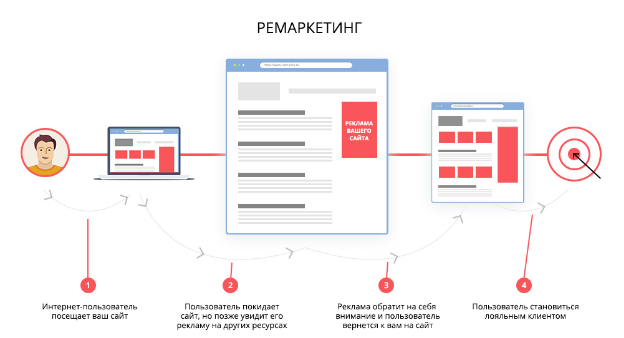
Retargeting is divided into several main categories: behavioral, search, and dynamic. Let's take a closer look at each of them.
Behavioral Retargeting
Precise targeting of active users based on an analysis of specific actions visitors take on the website. In this case, a variety of behavioral scenarios are tracked. For example, “adding items to the cart without completing the order,” “partially filling out a form,” “viewing N product categories,” and others.
A major advantage of this type of retargeting is that it allows for audience segmentation based on engagement scenarios.
For example:
- A user who was browsing the product catalog — a banner announcing new arrivals
- A user added an item to their cart but did not complete the order—you can display a banner with a limited-time offer for the selected product category.
- A year ago, the user ordered a seasonal item—remind them about this season's new arrivals.
Search Retargeting
This approach is designed to boost conversions through search engines and is particularly effective for purchases that involve a gradual decision-making process. The mechanism is simple: a user enters a commercial query, visits the website but does not take the desired action, and then receives a personalized offer during their next similar search.
The main advantage is that the ads adapt to the user’s previous behavior: the system tracks which pages the user has visited and displays a specific product (such as a used car) rather than a generic banner.
Dynamic Targeting
This type of targeting requires additional preparation: a product feed, integration with an e-commerce system, and regular updates to prices and inventory levels. In this case, the ads automatically select products tailored to each user based on their browsing history.
An ad can feature a single product, a carousel of recently viewed items, related products, or pre-made bundles—all personalized and up-to-date.
Audience targeting can be directed at several categories.The most obvious and valuable audience for retargeting— everyone who has already visited your website. You can segment them based on how far they browsed: those who just viewed the homepage; those who viewed a product page; those who added items to their cart but didn’t complete the order; and those who reached checkout but abandoned their cart. Different messages and offers are created for each segment. The main advantage is that you know for sure these people have already shown interest, and your job is simply to nudge them toward taking action.
If you have an app, that’s a powerful segment in its own right. You can show ads to people who have installed the app but haven’t opened it in a while—bringing them back with special promotions or update announcements. Cross-platform interaction is also possible: someone who viewed something on the web version but didn’t complete the action receives a push notification or an in-app ad (and vice versa).
There is another “hot segment” of the audience —people who have filled out a feedback form, subscribed to a newsletter, provided their phone number for a consultation, or registered for a personal account. They have already consciously shared their information with you—which means they’re interested in more than just a casual visit. You can engage with them through email retargeting (emails with personalized recommendations) or through anonymous retargeting on social media and other platforms (by uploading a database of phone numbers or email addresses to show ads to the same people, but outside of your website). This is the cheapest way to close sales, since you don’t pay to attract customers “from scratch”—you only pay for the reminder.)
Effectively engaging with your target audience is a crucial step toward long-term collaboration. Retargeting allows you to re-engage those who have already shown interest but didn’t complete a purchase, and to increase conversion rates without attracting “cold” visitors. Reaching out to this “warm” audience is significantly cheaper than targeting a new one, and personalized brand reminders or offers delivered at the right moment—immediately after viewing a product or abandoning a shopping cart—greatly increase the likelihood of a purchase..
Not using retargeting carries the risk of losing interested users who might return and place an order after receiving a follow-up reminder about your brand. The return on investment for initial traffic drops sharply—you’ve already paid for the visit but aren’t getting the full return on it, and every potential customer walks away for free to competitors who “sealed the deal” with retargeting.
Let's wrap things up
Retargeting isn’t just an optional feature—it’s an essential part of effective marketing. You’ve already invested in driving traffic to your website or mobile app, or in collecting contact information—why let that audience slip away? Properly configured retargeting allows you to bring back people interested in your brand and predictably increase conversions. Without it, you’re handing your potential customers over to competitors and reducing the ROI of all your other ad campaigns.
Other blog posts